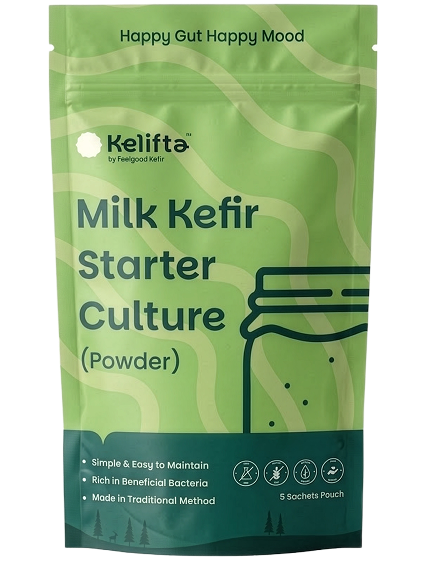
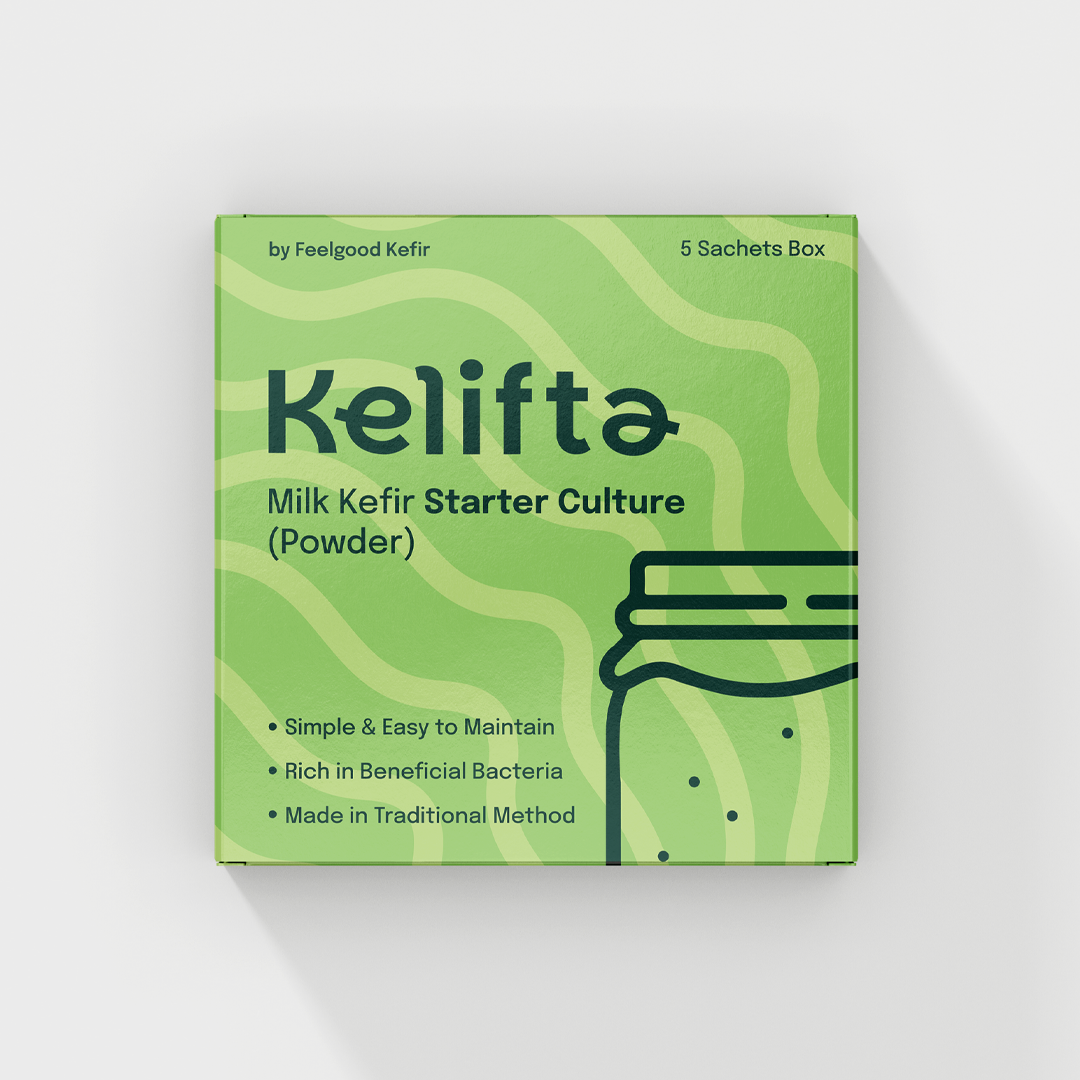
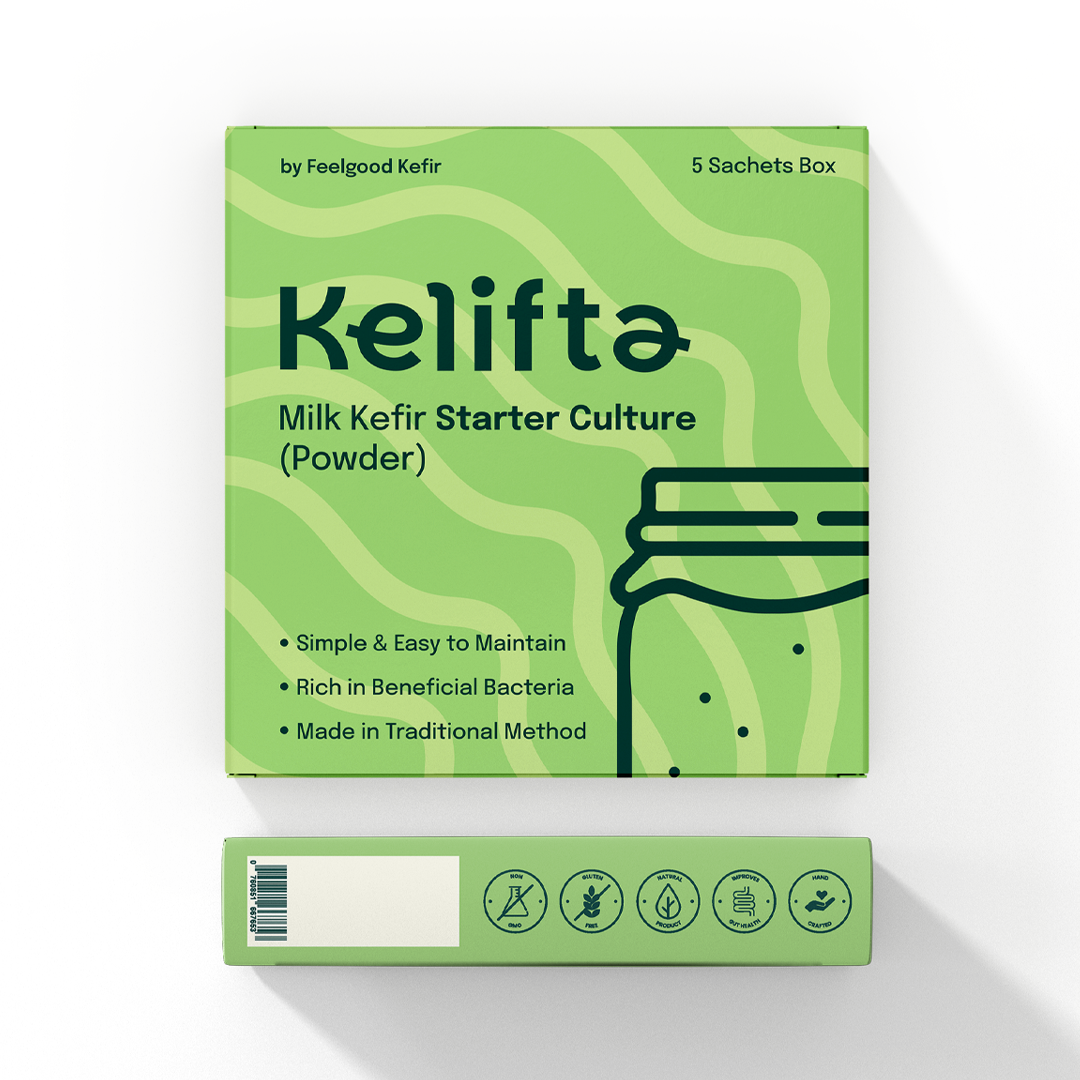
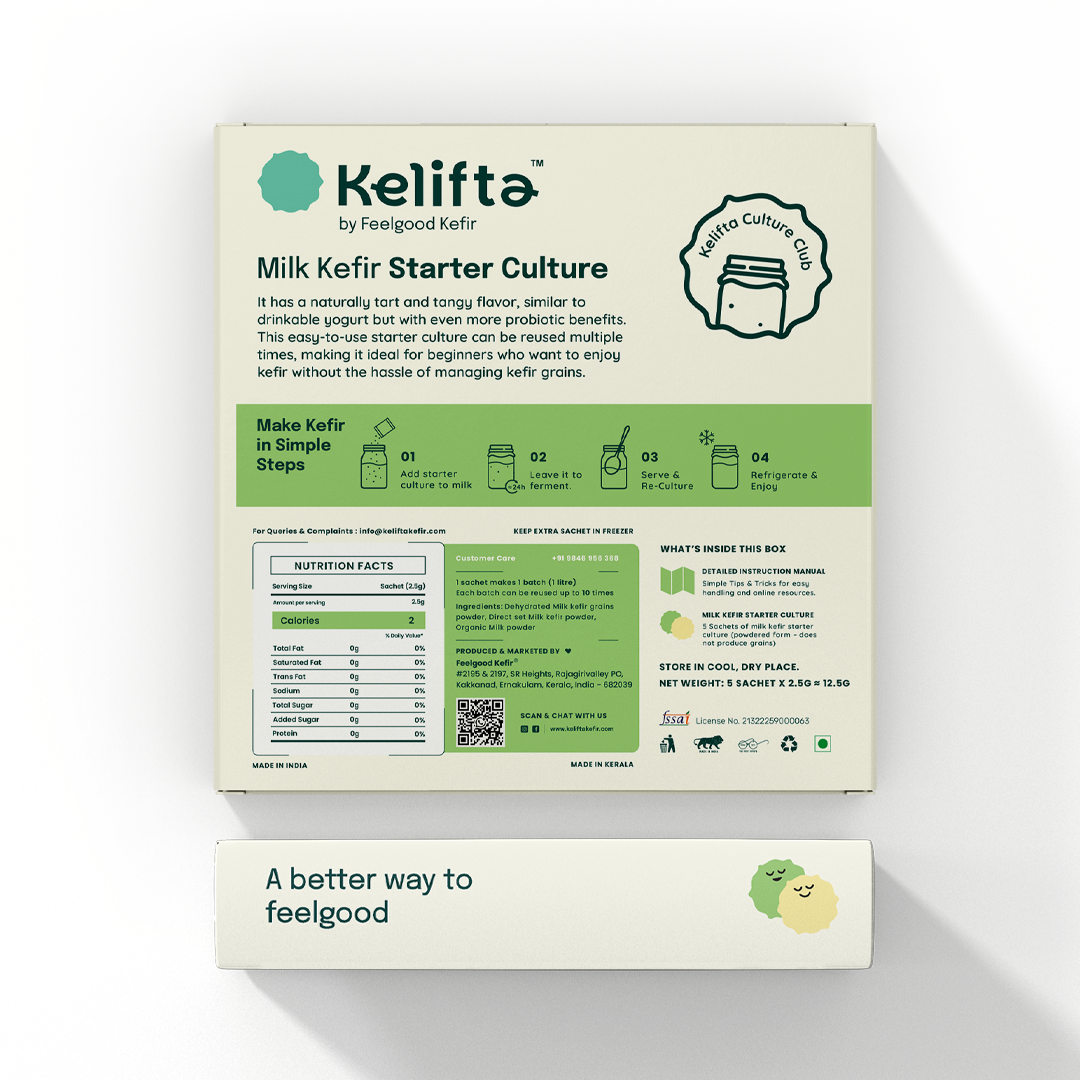
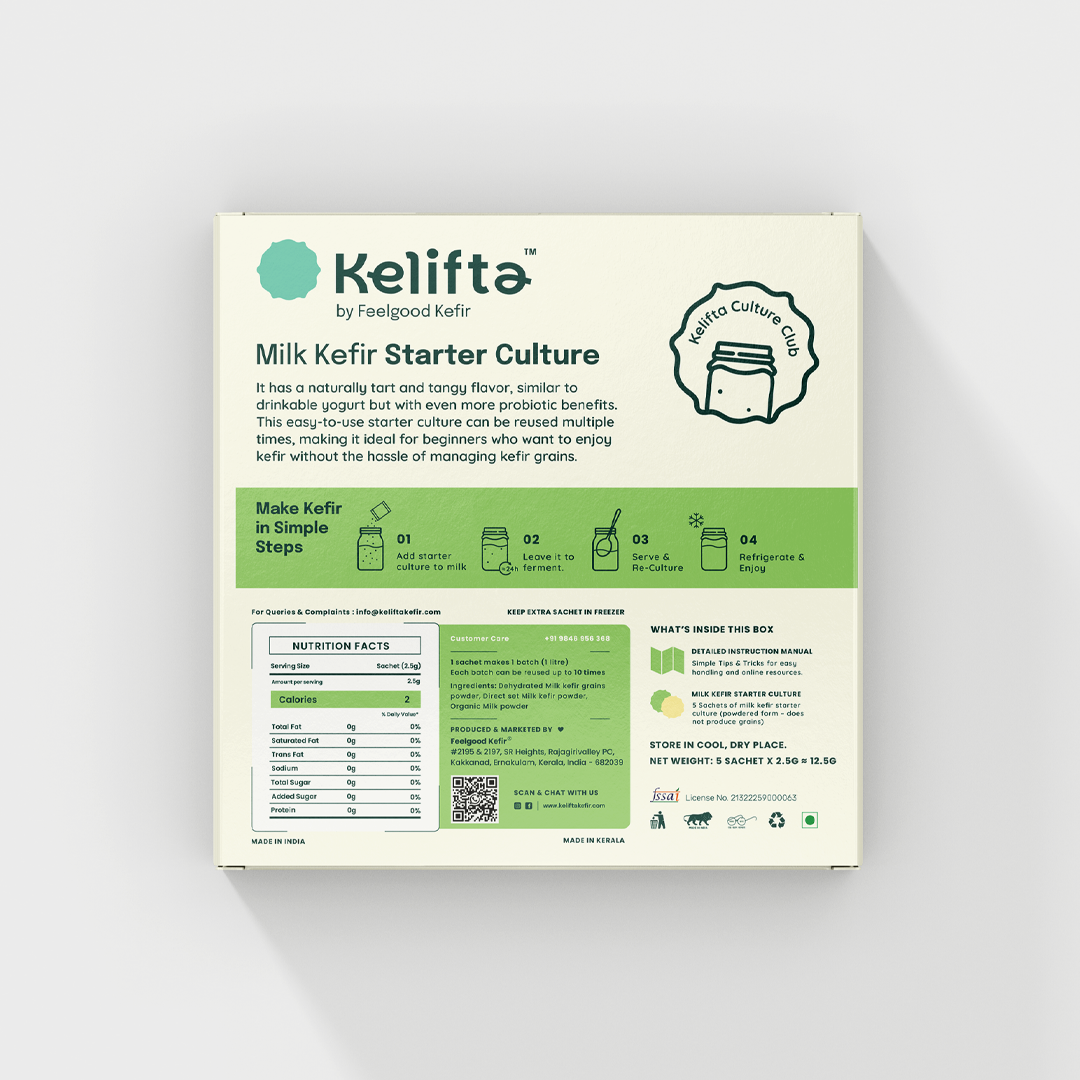
Milk Kefir Starter Culture Powder – 5 Sachet Pack

Product type:
Milk Kefir Starter Culture
(works with both dairy and non-dairy milk)
Net quantity:
–
What it makes:
Produces fresh kefir continuously as the grains grow and multiply
Diet type:
This is a vegetarian product
- Our Milk Kefir Starter Culture works with both dairy and non-dairy milk, providing flexibility for a wide range of dietary preferences.
- Enjoy the convenience of kefir-making without the need for daily maintenance and straining, unlike live kefir grains.
- Our starter culture ensures consistent, high-quality kefir with every batch, eliminating the unpredictability of live grains.
- Perfect for those new to kefir making, our starter culture simplifies the process, making it easy to get started.
- Make kefir for the whole family effortlessly, even with a busy schedule, thanks to our convenient powdered form
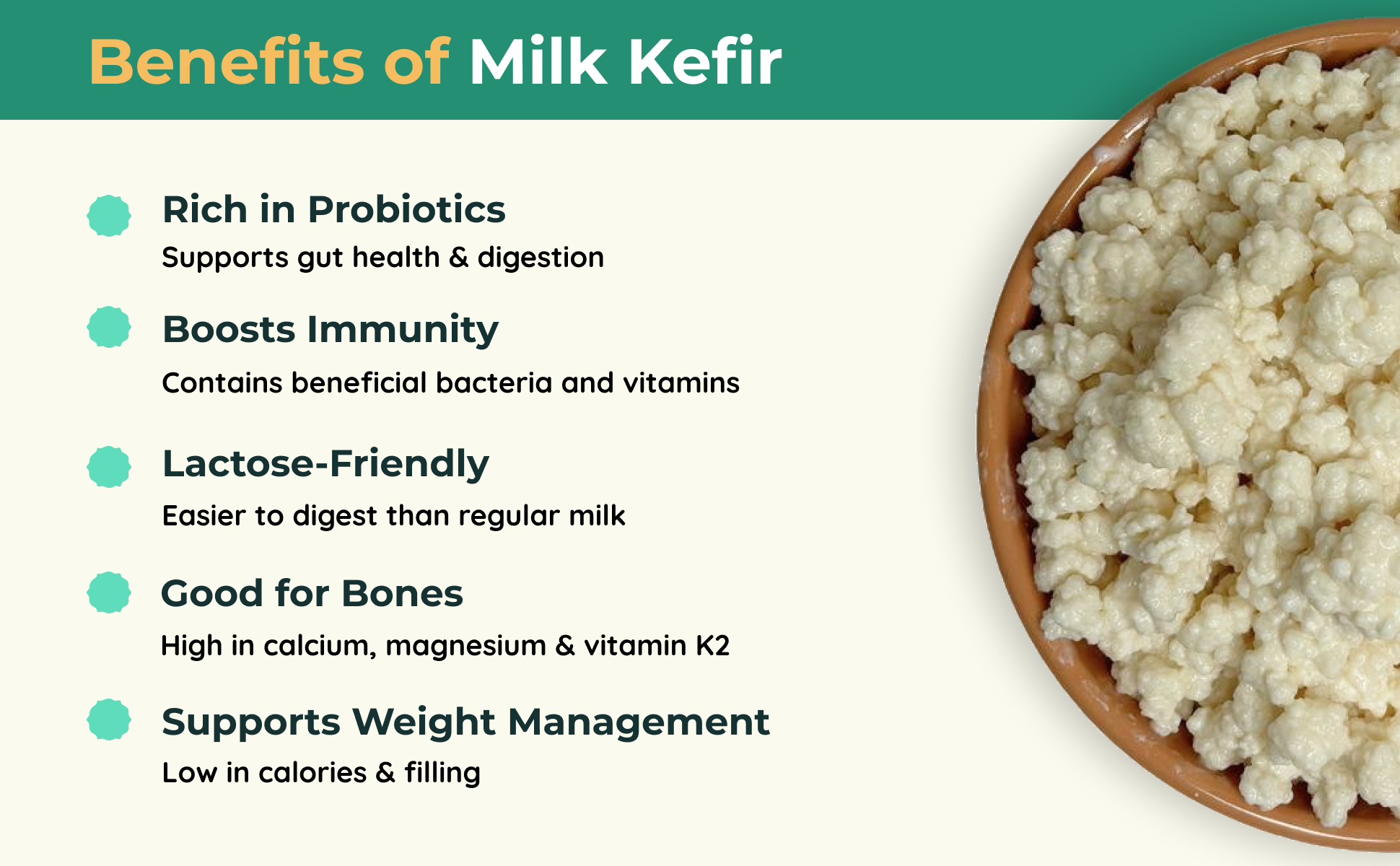
- Experience the numerous health benefits of kefir, including improved digestion and gut health, in a hassle-free way.
- Our product is made with strict quality standards to ensure you get the best results every time.
- Replacement guarantee if grains are damaged in transit
- Lifetime fermentation support & guidance
- Access to demo videos & FAQs
- Shelf life: up to 12 months in the freezer for maximum potency.
- Use anytime — longer shelf life than live grains.
- Open only when ready to start a batch.
- Seal and freeze leftovers immediately if partially used.
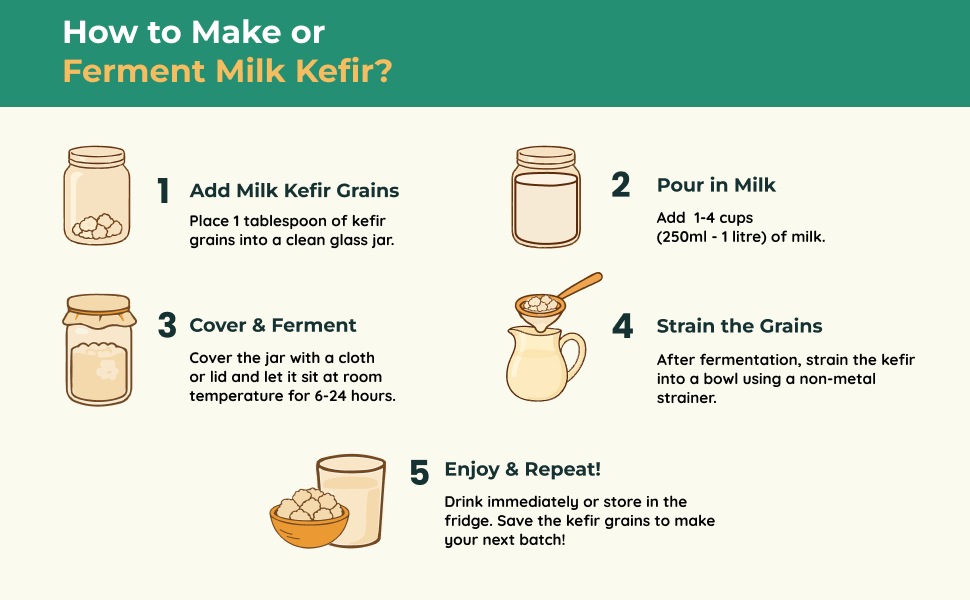
How to brew milk starter culture

Step 1: Add the Milk Grains to a jar of milk
Add 1 tablespoon of milk kefir grains into a clean glass jar with (250ml-1 litre) of milk in the jar.

Step 2: Leave it to ferment
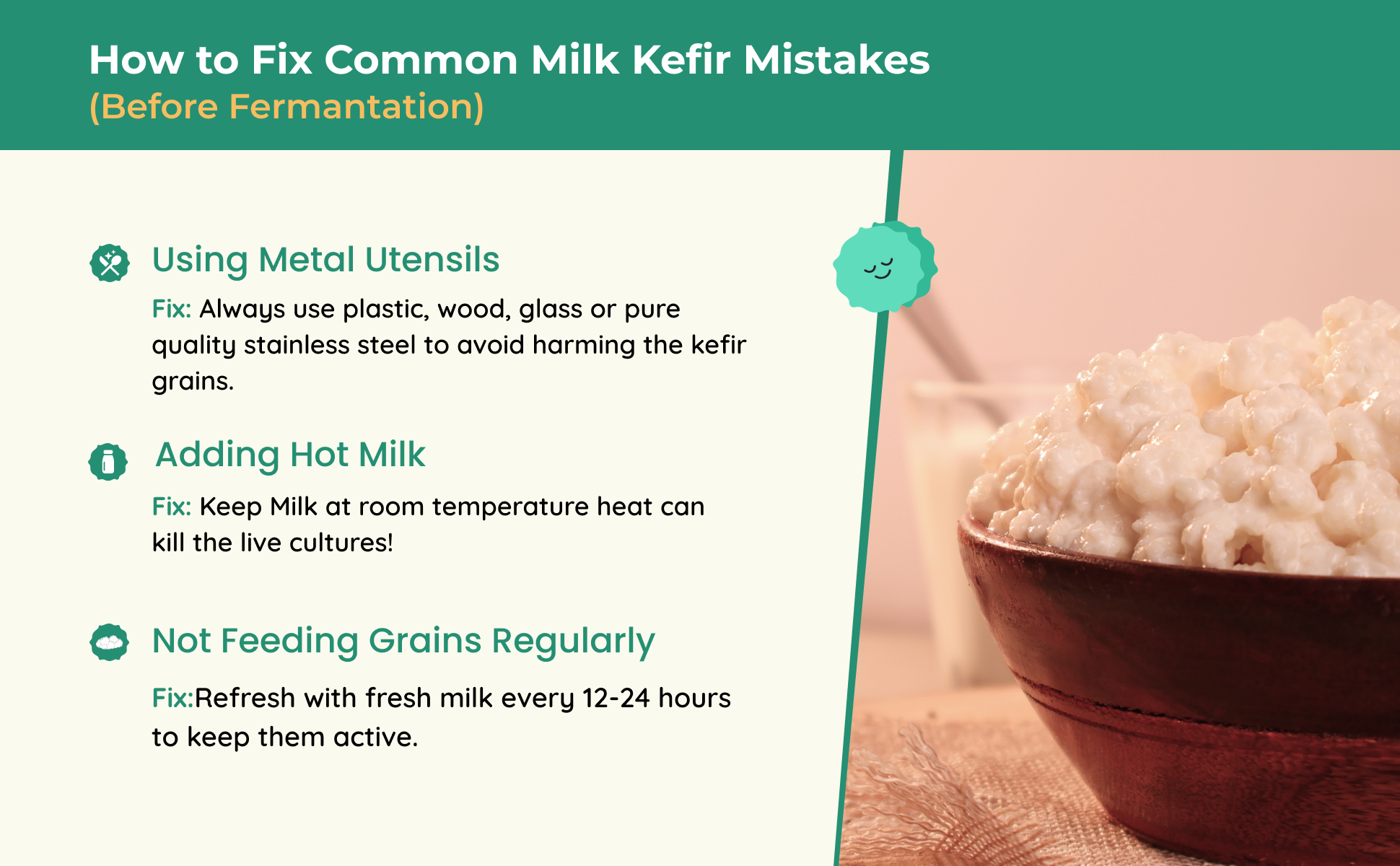
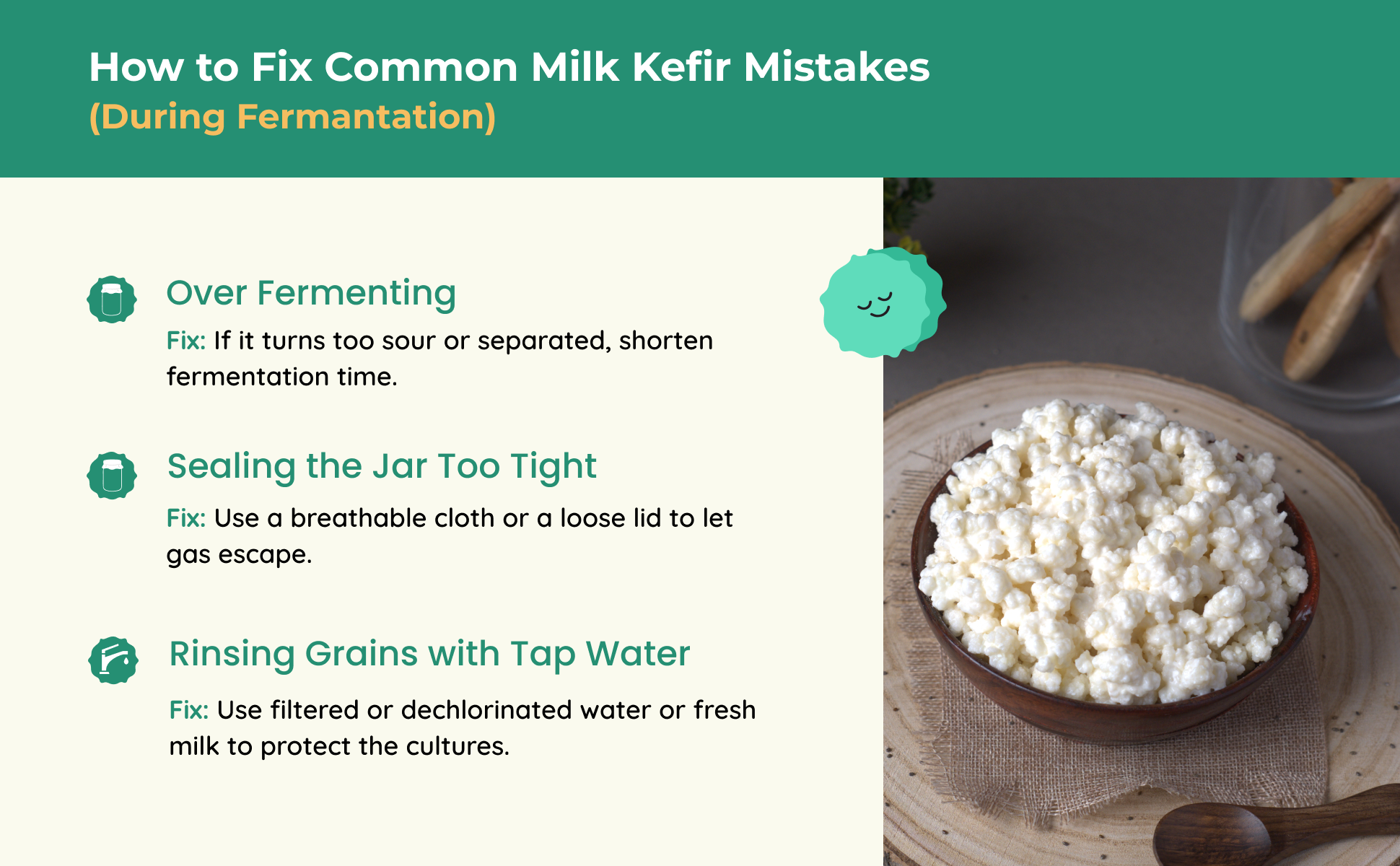
Cover the jar with a clean cloth or a lid and let it sit at room temperature for 6-24 hours.

Step 3: Enjoy your kefir
Your kefir is ready to drink. Reuse the kefir grains for your next batch.

Try out these recipes
See all



FAQs
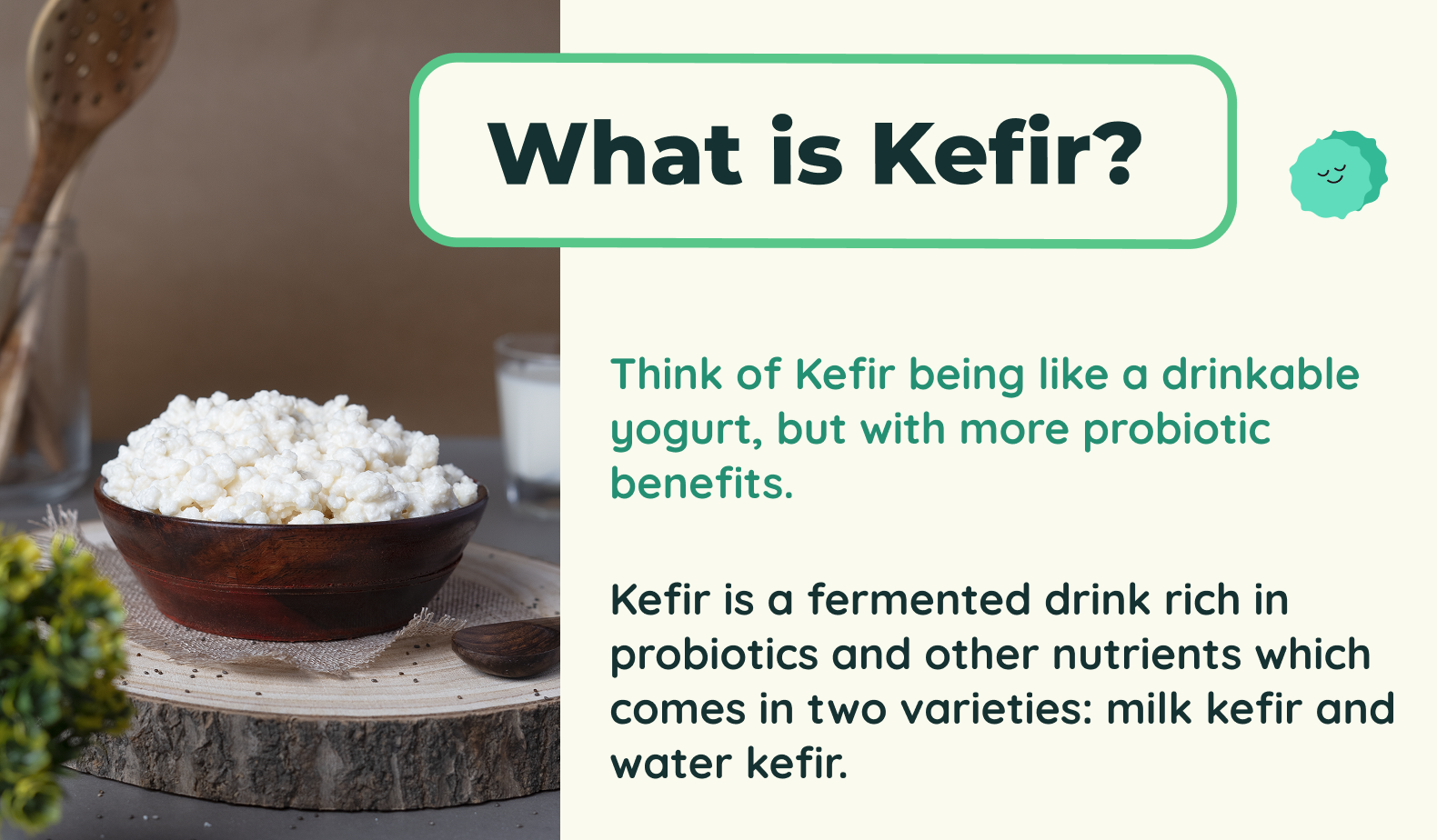
Milk kefir is a probiotic beverage made with either milk kefir grains or a powdered kefir starter culture. Milk Kefir Grains and Kefir Starter Culture can be used to culture dairy milk or coconut milk.
The taste of finished kefir varies greatly based on the type of milk used and the length of time it is cultured. Milk kefir can have a sour taste and an effervescent texture.
As with all cultured and fermented foods, a small amount of naturally occurring alcohol is typically present in the finished product. Although the amount will vary from batch to batch, for the typical brewing period, the amount should be quite low or negligible.
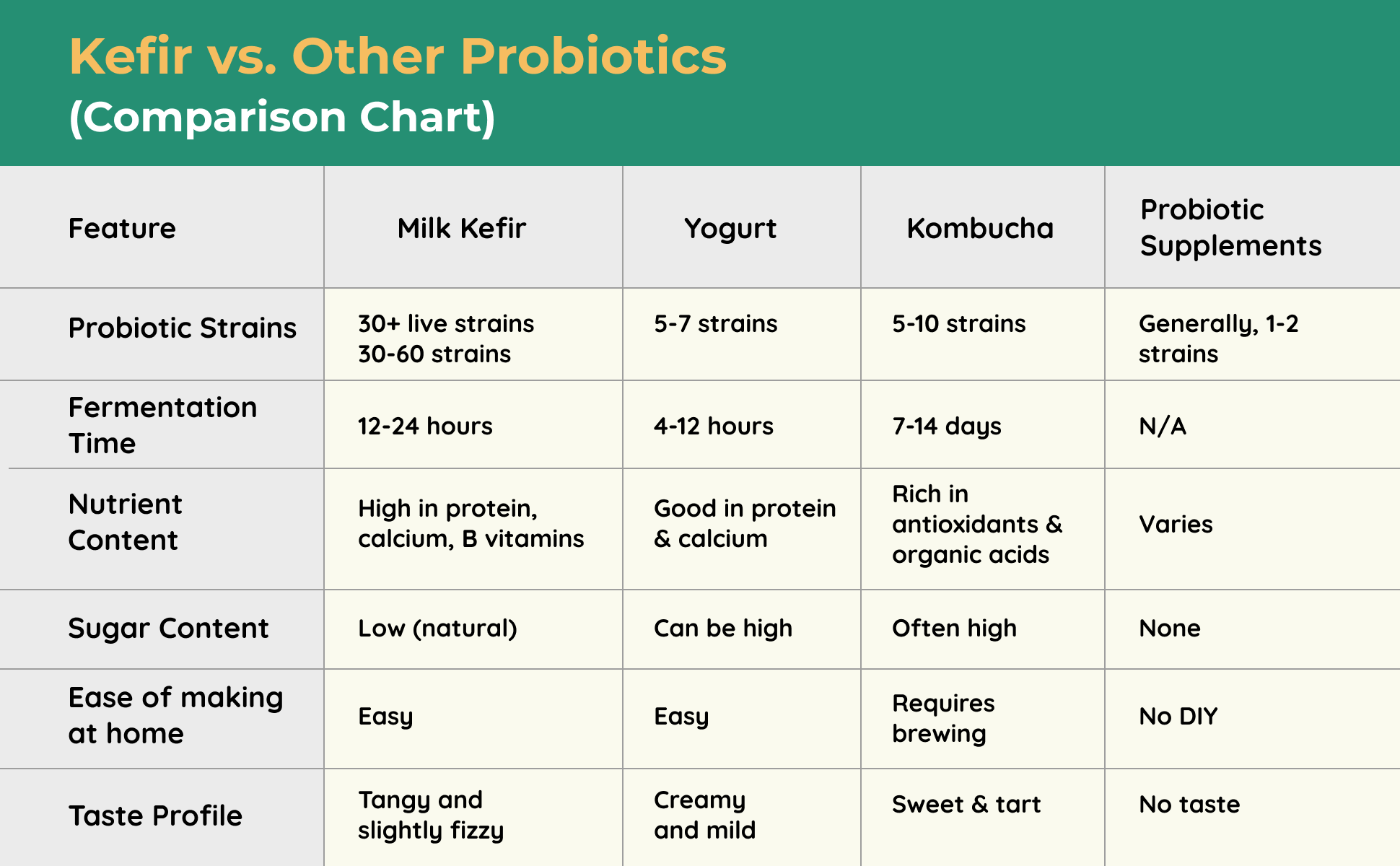
Water kefir contains fewer strains of bacteria and yeasts than milk kefir, but far more than other cultured products like yogurt or buttermilk.
Kefir grains consist of bacteria and yeast existing in a symbiotic relationship. The term "kefir grains" describes the look of the culture only. Kefir grains contain no actual "grains" such as wheat, rice, etc.
Our milk kefir grains are grown using only fresh organic grass fed cow milk.
We do not recommend using kefir grains to ferment plant-based milk, as we cannot guarantee that the grains will remain healthy or survive. For plant-based milks such as coconut, soy, or oat milk, we recommend using a powdered kefir starter culture instead.
Kefir grains can be used indefinitely to make kefir. Powdered starter culture can be reused for a number of batches, but will eventually stop culturing. Powdered kefir starter culture has a smaller initial investment cost than do kefir grains; however, you will need to continue to purchase new culture if you wish to make kefir beyond a few batches.
While the probiotics can vary with each batch made with milk kefir grains, it can contain from 60 to 95 plus strains of bacteria's & yeasts.
Yes, milk kefir grains are reusable. Once a batch of milk kefir has finished culturing, simply remove the milk kefir grains and place them in fresh milk. The powdered kefir starter culture is also reusable but limited to around 10 times.
If cared for properly, milk kefir grains have an unlimited life span and can be used repeatedly to make kefir. Kefir made with a direct-set style starter culture can often be re-cultured around 10 times. The exact number of successive batches will depend on the freshness of the kefir and hygienic practices employed.
In the case of milk kefir grains, homemade kefir will contain a larger number of probiotics than will commercial kefir, made with a powdered starter culture. Making kefir at home costs significantly less than commercial kefir and you have complete control over the milk you use (organic, grass fed, non-homogenized, raw, etc.)

Related products
Reviews
There are no reviews yet.